Look Up: The Real Gift of an Unplugged Ceremony
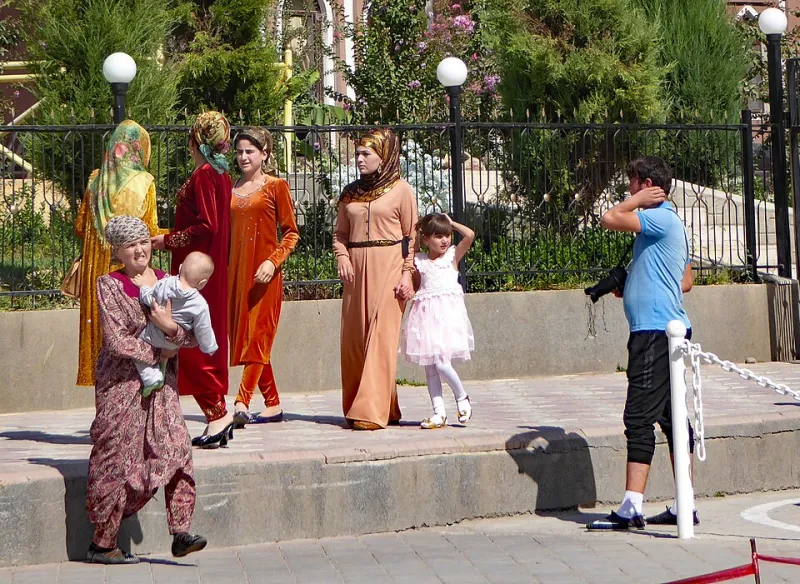
Photo: Hans Birger Nilsen, CC BY-SA 2.0, via Wikimedia Commons
I have photographed a lot of ceremonies. The ones that stay with me are rarely the ones with the most elaborate floral installations. They are the ones where people are actually looking up.
That is the real case for an unplugged ceremony. Not rules. Not control. Not a vendetta against smartphones. It is about giving everyone in the room — including you — a chance to be somewhere without also being everywhere else. And yes, the photographs get better. But the photographs are just evidence of something bigger.
What people miss when they watch through a screen
A phone does not just block a face. It changes a posture. The person holding it is half here and half somewhere else. They are framing, checking, swiping, thinking about the group chat. They are not fully in the room.
When guests are not filming, they look at you. They tear up at the right moment. They reach for the hand next to them. They laugh out loud at the vow that lands funny. Those are the moments I can photograph — the grandmother wiping her eyes, the best friend mouthing 'you got this,' the dad doing the tiny nod that means he is barely holding it together.
I have also seen the other version. A sea of raised phones. The couple walking down the aisle toward a wall of screens. The kiss happening behind six iPhones. It does not ruin the day. But it does flatten it. The ceremony becomes content instead of experience.
The wording matters more than the rule
You do not need to be stern about this. In fact, the gentler the wording, the better it usually works. People respond to an invitation far more warmly than they respond to a command.
For a sign at the entrance, try something like: 'We invite you to be fully present with us today. Please keep phones and cameras away during the ceremony. After the kiss, take all the photos you want — we want to see them.'
For the officiant, a short announcement before the processional is plenty: 'The couple asks that you join them in being fully present for this ceremony. Please silence and put away phones and cameras until they are officially married. They can't wait to see your photos from the reception.'
That last part matters. Give people a yes after the no. They are not being told never to take a photo. They are being told when.
Handling the aunt who loves her camera
There is always someone who feels personally addressed by the request. Maybe it is an aunt who has photographed every family event since 1998. Maybe it is a cousin who drove six hours and wants proof. Maybe it is a parent who is genuinely hurt to be asked to put their phone away.
I get it. This is where a little pre-emptive grace goes a long way. Have one person — a sibling, a maid of honor, a planner — who can gently handle the conversation before the day gets emotional. Not a confrontation. Just a heads-up: 'Hey, they are doing an unplugged ceremony. I know you love taking pictures, but they really want to see faces. There will be plenty of time after.'
If someone pushes back hard, you have options. You can allow a designated family member to shoot from the back with a quiet camera. You can make the unplugged request apply only to the ceremony and not the reception. You can let it go and choose your battles. The goal is presence, not perfection. A ceremony is not ruined because one person has a phone. You are setting a tone, not policing a felony.
The photographs that happen when people look up
When the phones go away, the gallery changes. I get the reactions. The full-body laugh. The held breath during the vows. The way a groom's face changes when he sees his bride for the first time. The flower girl peeking around a pew. The officiant's kind pause before the rings.
Those are not staged moments. They are the natural result of a room full of people paying attention to the same thing at the same time. And that is increasingly rare. It feels special because it is special.
I am not here to tell you that every wedding must be unplugged. Your day, your call. But if you are considering it, know that it is not about banning phones. It is about making space for faces. For tears. For the kind of stillness that lets a ceremony land.
Look up. That is the whole invitation.